A Majority Mandate.
What a Liberal Win Could Mean for Canada’s Future

If Prime Minister Mark Carney’s Liberals secure a majority government in the April 2026 election — now within reach after recent floor crossings and upcoming by-elections — Canada could see a decisive shift toward accelerated policy implementation, less legislative gridlock, and a more assertive federal role in shaping national priorities. With 170 seats already, just two shy of a majority, the Liberals are poised to govern with greater authority — and that authority will likely be used to deepen their existing agenda, not pivot from it.
Expect affordability to remain front and center. A majority would empower the government to push through targeted tax relief, housing reforms, and cost-of-living supports without needing to negotiate with opposition parties. That could mean faster action on rent control, childcare expansion, and energy subsidies — all aimed at easing pressure on households still reeling from inflation and high interest rates.
On climate, a Liberal majority would likely accelerate the transition to net-zero. The carbon tax would stay, but with more investment in clean tech, grid modernization, and green jobs. Expect bolder regulations on emissions, stronger incentives for EV adoption, and increased funding for Indigenous-led renewable projects — all backed by the political capital to withstand pushback.
Healthcare and social services would also see expansion. The Liberals have signaled plans to build on pharmacare, expand mental health coverage, and improve long-term care — all of which require sustained funding and coordination across provinces. A majority would make that easier, reducing reliance on intergovernmental negotiations that often stall progress.
Immigration policy would continue its current trajectory: high targets, but with greater emphasis on integration, settlement services, and combating misinformation. The government has already taken steps to streamline pathways for skilled workers and international students — a majority would allow them to scale those efforts without fear of political backlash.
Foreign policy would remain anchored in multilateralism. Canada would continue to support Ukraine, strengthen NATO commitments, and advocate for climate diplomacy — while also navigating tensions with China and the U.S. on trade and security. A majority government would give Carney more room to act decisively abroad, without needing to appease opposition factions at home.
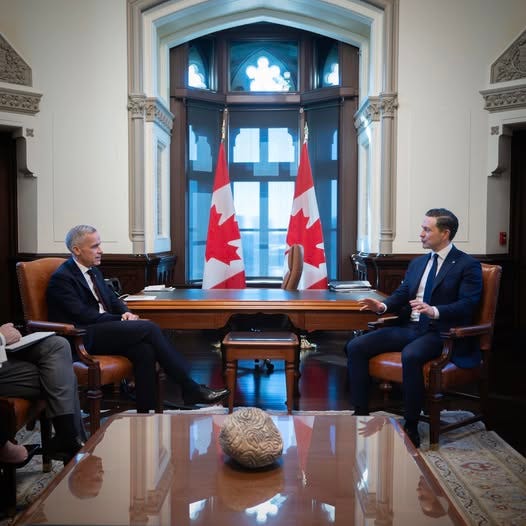
Critics will argue that a Liberal majority risks overreach — that it could stifle debate, centralize power, and ignore regional concerns. But supporters will see it as necessary: a mandate to deliver on promises, to act on climate, to protect social programs, and to ensure Canada remains a stable, inclusive, and forward-looking nation.
The stakes are high. A Liberal majority wouldn’t just mean more power — it would mean more responsibility. And for a country still grappling with division, inequality, and global uncertainty, that responsibility may be exactly what’s needed.