Canada Is Back.
How Mark Carney Returned Canada to the World Stage.

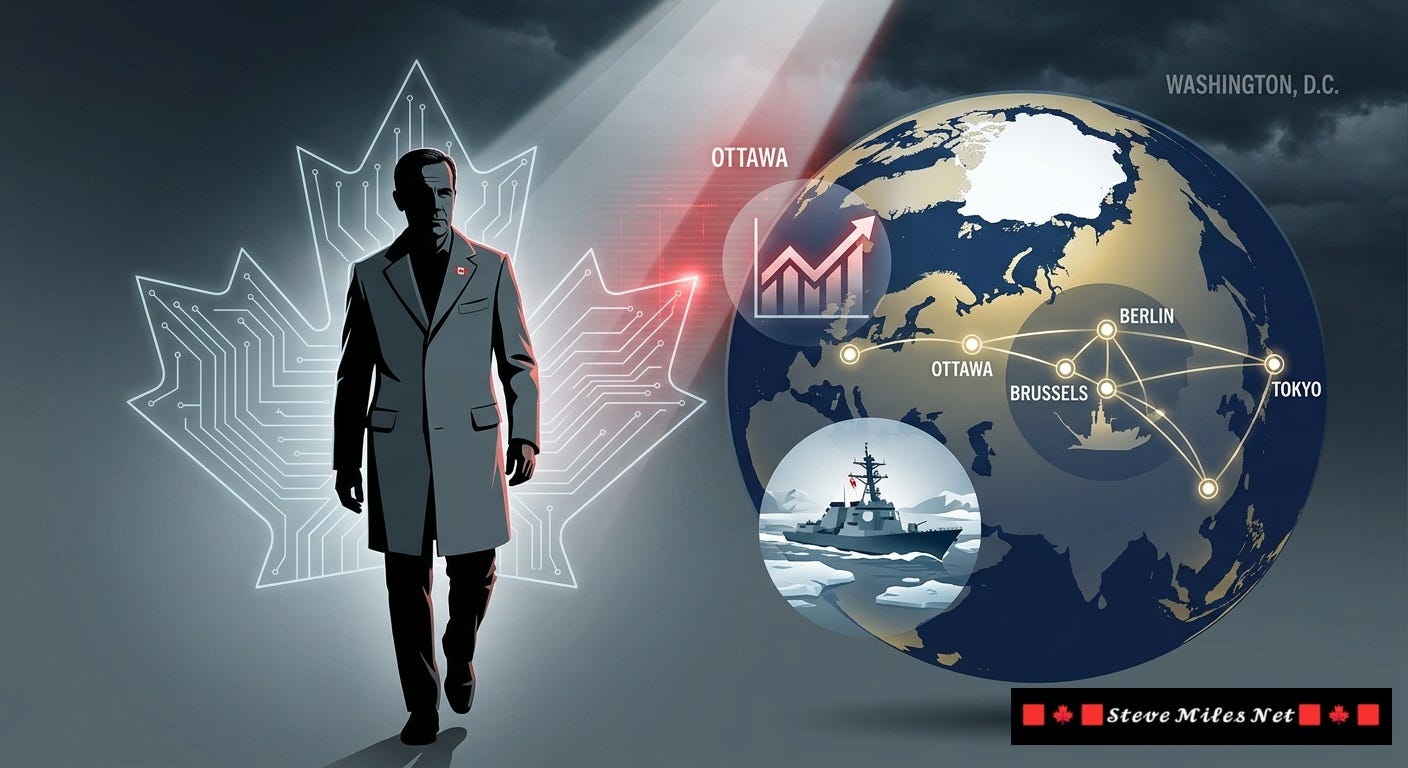
For much of the past decade, Canada occupied a peculiar position in global affairs — respected in principle, but rarely decisive in practice. Under Justin Trudeau, Canada was liked, even admired for its progressive values, but increasingly sidelined in the rooms where consequential decisions were made. Allies appreciated Canada’s symbolism but quietly questioned its strategic weight. That era appears to be ending. Under Mark Carney, Canada is not just showing up — it is being taken seriously.
Carney arrived at the prime ministership with a resume that most world leaders would envy. Former Governor of the Bank of Canada, former Governor of the Bank of England, architect of global financial stability frameworks during two of the most turbulent economic periods in modern history — Carney did not need an introduction on the world stage. He already had a seat at the table. What he has done is pull Canada into that seat alongside him.
The timing could not be more consequential. With Donald Trump back in the White House and aggressively destabilizing the post-war liberal international order — threatening tariffs, questioning NATO commitments, and openly musing about annexing Canadian territory — the world has been searching for credible, steady voices to fill the leadership vacuum. Carney has stepped into that role with a confidence and fluency that has visibly surprised even seasoned diplomatic observers. Where Trudeau often spoke the language of values, Carney speaks the language of power — economic, strategic, and institutional — and the world’s capitals are listening.
In Europe, the shift in perception has been striking. Brussels and Berlin, long frustrated by Canada’s inability to fully leverage CETA or assert itself on transatlantic security, now see Ottawa as a more reliable and sophisticated partner. Carney’s fluency in European financial and regulatory frameworks — earned during his years steering the Bank of England through Brexit — gives him credibility that no Canadian prime minister has carried into European diplomacy in recent memory. France, in particular, has warmed considerably, viewing Carney as a rare North American leader who genuinely understands multilateral institutions and is committed to defending them.
In Asia and among G20 partners, Canada’s repositioning is equally notable. Carney has signaled a more assertive Canadian foreign policy — one grounded in economic realism rather than idealistic posturing. His proposed $63 billion defense and strategic investment framework has sent a clear message: Canada is prepared to spend, to build, and to compete. For allies who had grown accustomed to Canada free-riding on American security guarantees while offering little in return, this represents a meaningful course correction.
Perhaps most significantly, Carney has reframed the narrative around Canadian sovereignty. In response to Trump’s provocations — including repeated suggestions that Canada could become the 51st state — Carney has been unambiguous, measured, and firm. He has not taken the bait emotionally, but has responded strategically, accelerating domestic defense investment, diversifying trade relationships, and building coalitions with like-minded democracies. The world has noticed. Canada is no longer reacting — it is positioning.
At home, critics argue that Carney’s international stature has yet to translate into tangible domestic gains — that the applause from Davos and Brussels does not pay Canadian mortgages or fill food banks. That critique is fair and deserves serious engagement. But foreign policy and domestic policy are not mutually exclusive, and a Canada that commands respect internationally is better positioned to negotiate trade deals, attract investment, and shape the rules of a rapidly changing global order in ways that ultimately benefit ordinary Canadians.
The world’s view of Canada under Carney can be summarized simply: relief. Relief that a serious, credible, and experienced leader has emerged at a moment when the Western alliance desperately needs one. Relief that Canada — long seen as America’s quiet, agreeable neighbor — is finally asserting an independent identity on the global stage. And relief that the country which has long preached multilateralism, human rights, and economic cooperation is now willing to back those values with strategy, investment, and political will.
Canada has always had the potential to punch above its weight. Under Mark Carney, it is finally doing so. The world is watching — and for the first time in years, it is watching with genuine interest.