The Checkout Strike.
How Canadians Can Force Big Grocery to Blink.

For years, the ritual of grocery shopping in Canada has felt increasingly like a one-sided negotiation where the consumer has no leverage. We walk through the sliding glass doors, grab a cart, and submit to the sticker shock of eight-dollar butter and double-digit bags of grapes. The narrative from the corporate boardroom is always the same: global supply chain pressures, carbon taxes, and thin margins. Yet, as the “Big Three” continue to post billion-dollar profits, the math for the average Canadian family simply doesn’t add up.
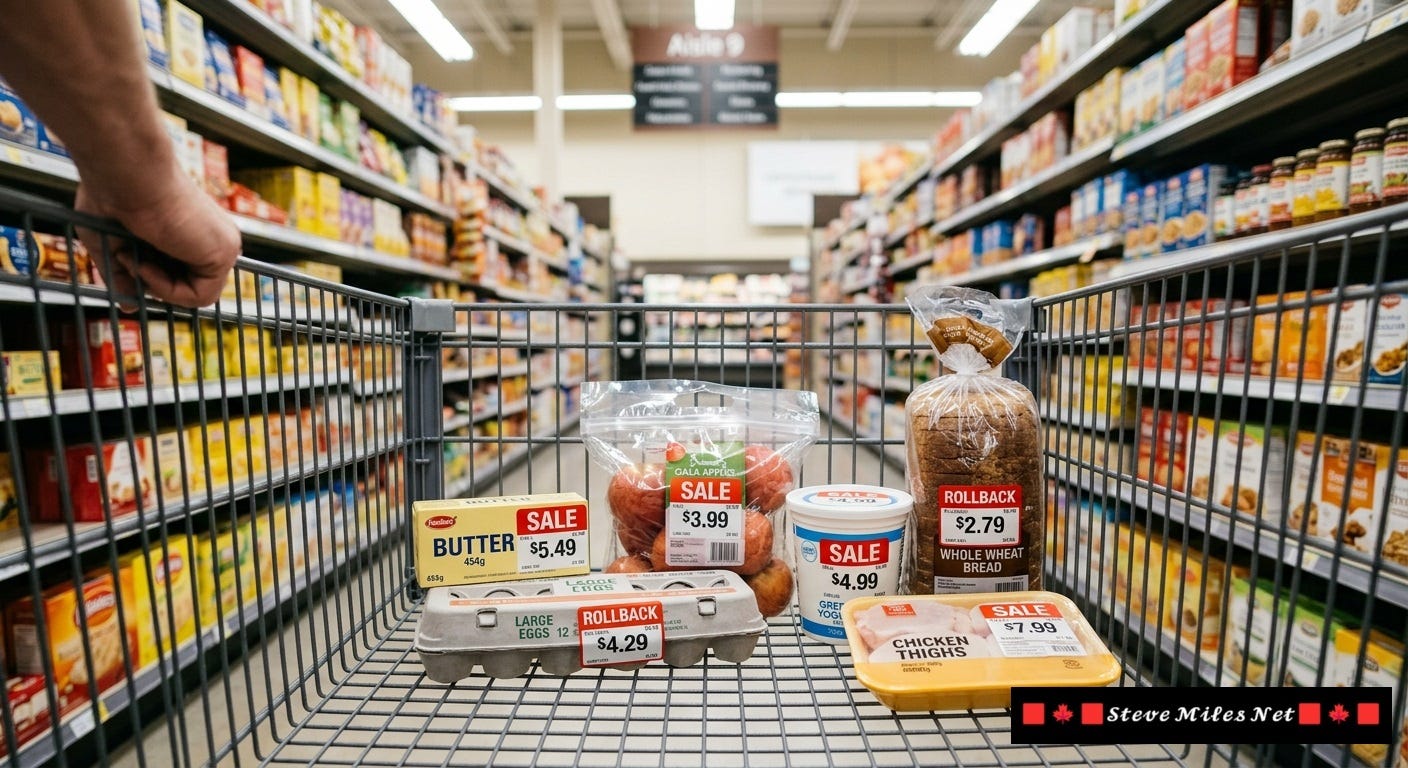
If we want the giants to lower prices, we have to stop asking for relief and start demanding it through the only language a corporation speaks: the bottom line. It is time for a disciplined, nationwide shift in how we shop. We must become “Loss Leader Specialists”—consumers who walk into a store, buy only what is on sale, and walk right back out without a single full-priced impulse buy.
The logic of the modern grocery store relies on the “loss leader” strategy. This is when a retailer sells a high-demand item, like milk, eggs, or chicken breast, at or below cost to lure you through the door. Their entire business model assumes that once you are inside for the cheap chicken, you will also buy the full-priced crackers, the marked-up cereal, and the overpriced condiments. This is where they make their real money. When we fill our carts with these high-margin items, we are effectively subsidizing their ability to squeeze us elsewhere.
To fight back, we must break this cycle of convenience. If Canadians collectively refused to buy anything that wasn’t a genuine, deep-discount sale item, the corporate algorithm would begin to glitch. Imagine thousands of shoppers entering a store, clearing out the advertised specials, and leaving the high-margin aisles untouched. When the inventory of full-priced goods sits rotting on the shelves or gathers dust in the warehouse, the “margin mix” that shareholders love so much begins to collapse.
This requires a level of tactical shopping that many find exhausting, but it is the most potent form of peaceful protest available to us. It means utilizing price-matching apps, checking flyers before leaving the house, and being willing to visit three different stores to get three different deals. It means embracing “the freezer method”—buying sale items in bulk and ignoring the rest of the store until the next cycle of discounts.
The critics will say this is a drop in the bucket, or that it’s too much work for a busy public. But market dynamics are more sensitive than we think. Grocery giants operate on high volume; even a 5% or 10% shift in consumer behavior toward exclusive sale-shopping sends a shockwave through their data analytics. When the data shows that Canadians are no longer “filling the basket,” the only way for these stores to regain their volume is to lower the baseline prices of the items we’ve been ignoring.
We have spent too long waiting for government intervention or “codes of conduct” to save our bank accounts. The power to move the needle isn’t in a politician’s hands; it’s in the handle of your grocery cart. By refusing to buy into the high-margin trap, we force the industry to compete for our loyalty again. It’s time to stop being passive “customers” and start being the market force that makes Big Grocery blink.