The Predatory Pivot.
Analyzing the Asymmetry of the 2025-2026 United States-Canada Trade War and the Orchestrated Blame of a Continental Partner.

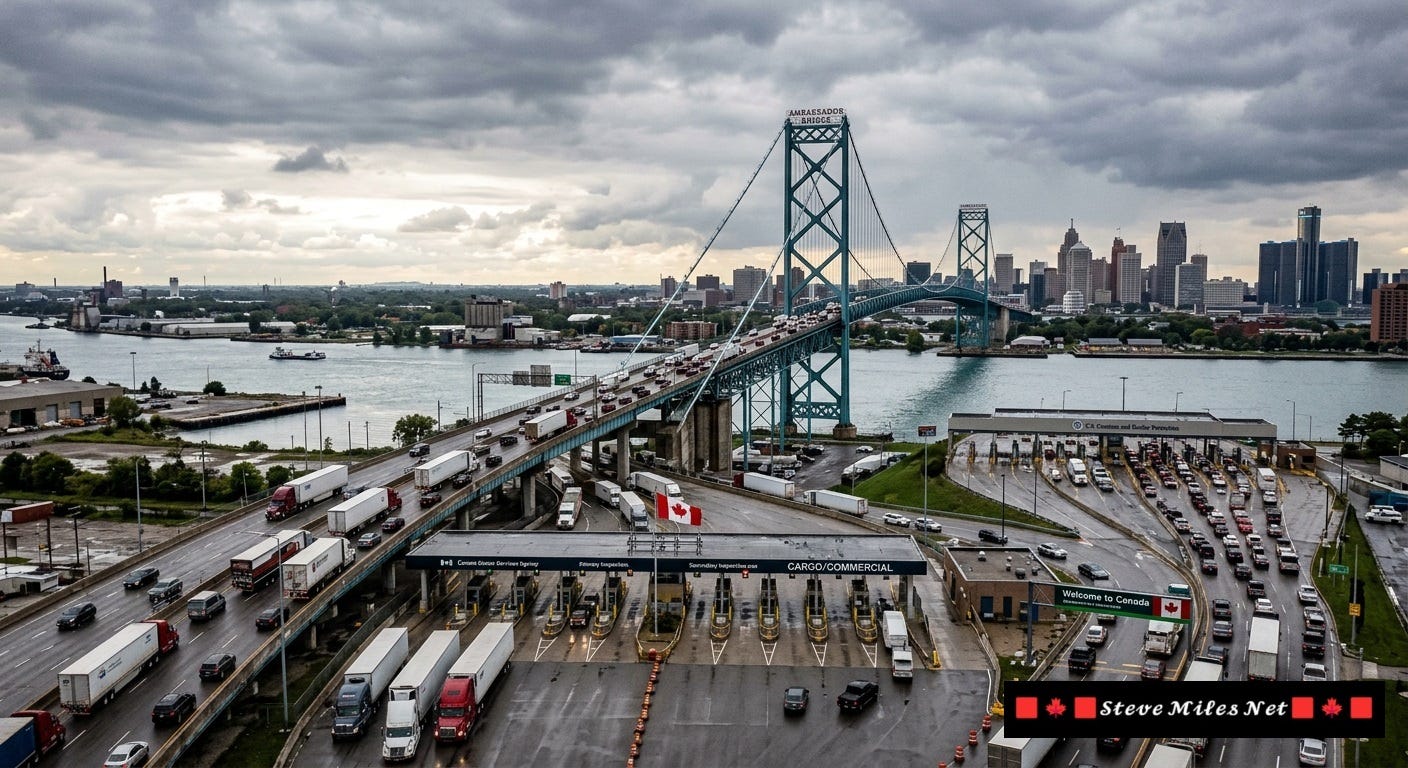
The geopolitical architecture of North America, traditionally anchored by the world’s most successful and integrated bilateral relationship, began a process of profound and perhaps irreversible fracturing on February 1, 2025. On that date, the United States administration initiated a universal trade war against Canada, characterized by the immediate imposition of a 25% tariff on the majority of Canadian imports and a 10% levy on essential energy products. This aggressive maneuver was not presented to the public as a standard trade dispute but was instead framed as a matter of urgent national security and a necessary response to a perceived existential threat originating from the north. However, an exhaustive examination of the trade data, border security statistics, and the intricate webbing of North American supply chains reveals a starkly different reality. The United States has engaged in a strategy of systematic economic coercion, unfairly targeting its closest ally while leveraging domestic American social crises—specifically the fentanyl epidemic and illegal migration—as a rhetorical shield to justify a protectionist and potentially annexationist agenda.
The unfairness of the American position is rooted in a fundamental disconnect between the stated casus belli and the empirical evidence. While Washington has blamed Canadian “weak border policies” for the flow of lethal drugs and unauthorized persons into the U.S. interior, the statistical footprint of the northern border in these crises is mathematically negligible compared to the southern border or domestic American distribution networks. In 2024, the year preceding the tariff declaration, U.S. authorities intercepted a total of 19 kilograms of fentanyl at the Canadian border, compared to over 9,600 kilograms seized at the Mexican border—meaning the northern flow represented just 0.20% of the total known cross-border supply. Similarly, the 23,000 apprehensions at the northern border that year were a mere 1.53% of the 1.5 million recorded at the southern border. To penalize the entirety of Canada’s economy for a narcotics flow that is a rounding error in the national total is a disproportionate action without modern precedent. Furthermore, analysts have noted that the net flow of narcotics may actually be negative for Canada, as the country suffers from a domestic opioid crisis fueled in part by pharmaceutical precedents originating within the United States. By framing the northern border as a site of “invasion,” the U.S. administration has effectively engaged in a campaign of disinformation to provide a populist justification for tariffs that would otherwise be seen as economically damaging to the U.S. consumer.
The 10% tariff on Canadian energy exports represents perhaps the most significant strategic contradiction in the American trade war. Canada is the United States’ largest and most reliable supplier of energy, providing nearly 60% of all U.S. crude oil imports and a vast majority of its natural gas and electricity . The U.S. administration justified these energy tariffs as a means to reduce the trade deficit with Canada, which stood at approximately US$55 billion in late 2024. However, this deficit is almost entirely a product of American demand for Canadian heavy crude; when energy products are removed from the ledger, the United States consistently maintains a trade surplus with Canada . Even under the pressure of tariffs, U.S. dependence on Canadian crude actually increased to 64% of total imports in 2025 due to sanctions on other suppliers like Venezuela . This pressure catalyzed a historic shift in global energy markets: by April 2025, the completion of the Trans Mountain pipeline allowed Canada to export more seaborne crude to China than to the United States for the first time in history. By taxing these imports, the U.S. is essentially imposing a self-inflicted tax on its own industrial base while pushing Canada into the arms of geopolitical rivals.
The automotive industry has been another primary target of American aggression, with the U.S. administration alleging that the sector is unbalanced. In reality, Canada runs a persistent aggregate automotive trade deficit with the United States of approximately $5.0 billion . While Canada maintains a $5.2 billion surplus in finished vehicle assembly, this is completely negated by massive deficits in the vehicle parts and bodies segments, which sit at $9.1 billion and $1.1 billion respectively . The unfairness of the U.S. position is further highlighted by Canada’s shrinking role; its share of U.S. automotive consumption fell from 9% in 2012 to just 5% in 2022 . Because automotive parts cross the border up to eight times before a car is completed, the 25% tariffs act as a compound tax on a single integrated ecosystem, raising costs for U.S.-based manufacturers and families alike .
The legal framework used to prosecute this trade war has been as erratic as the rhetorical one. Initially, the U.S. utilized the International Emergency Economic Powers Act (IEEPA) to declare a national emergency over fentanyl. This was struck down by the U.S. Supreme Court in February 2026 in Learning Resources, Inc. v. Trump, which ruled that the administration failed to provide a link between the threat and the trade measures. Rather than accepting this judicial limit, the administration immediately pivoted to Section 122 of the Trade Act of 1974 to impose a “temporary” 10% global tariff based on a questionable “balance-of-payments emergency”. Concurrently, the U.S. Trade Representative launched Section 301 investigations into 60 countries, including Canada, for alleged failures to enforce forced labor bans—a move widely seen as a tactical maneuver to re-impose tariffs under a different legal authority after the previous justifications were invalidated.
While the 2025-2026 trade war introduced new levels of aggression, the U.S. has also doubled down on historical trade irritants like dairy and softwood lumber. Despite a 2023 USMCA panel ruling that Canada’s dairy quotas were not inconsistent with the agreement, the U.S. continues to cite high over-quota tariffs as proof of bad faith . Similarly, the softwood lumber dispute has seen the U.S. maintain duties around 10% despite acute domestic housing shortages . By maintaining these “forever tariffs,” Washington ensures Canada remains in a defensive posture during the broader renegotiation of the continental trade order. This has had a transformative effect on Canadian domestic politics, fueling a widespread boycott of American products and a 70% drop in flight bookings to the U.S.. This environment facilitated the rise of the Carney Doctrine, led by Prime Minister Mark Carney, who declared that the “old relationship” based on deep integration and American goodwill is over. Canada is now diversifying its markets, investing $75 million into the AgriMarketing Program to reduce dependence on U.S. buyers, and prioritizing sovereign control over critical technologies.
Ultimately, the trade war is a self-inflicted wound for the American economy. By January 2026, core goods prices in the U.S. were 2.3% higher year-over-year, a sharp deviation from the pre-tariff trend of -0.1%, and durable goods rose by 2.5% compared to a -2.0% trend. These tariffs have functioned as a massive, regressive tax, costing the average American household between $1,200 and $1,700 annually. Meanwhile, U.S. manufacturing employment fell steadily throughout 2025, as the increased cost of intermediate inputs like steel and aluminum made American factories less competitive . As the July 2026 USMCA review approaches, the U.S. strategy of blaming Canada for domestic failures while profiting from the integration it provides has reached a breaking point . Unless Washington moves toward an evidence-based trade policy, the “Special Relationship” will remain a relic of the past, replaced by a cold, transactional competition that benefits no one but the continent’s global rivals.